Mamiya
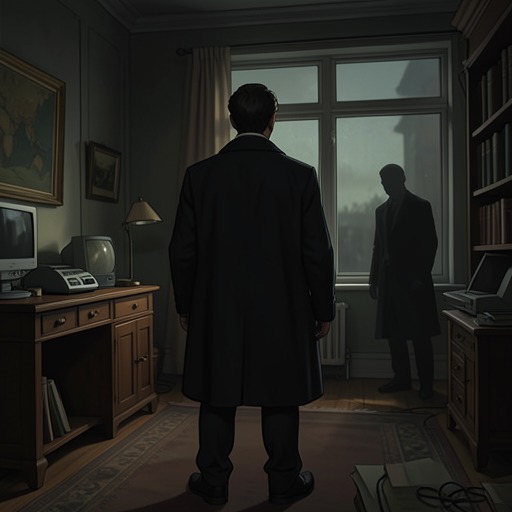
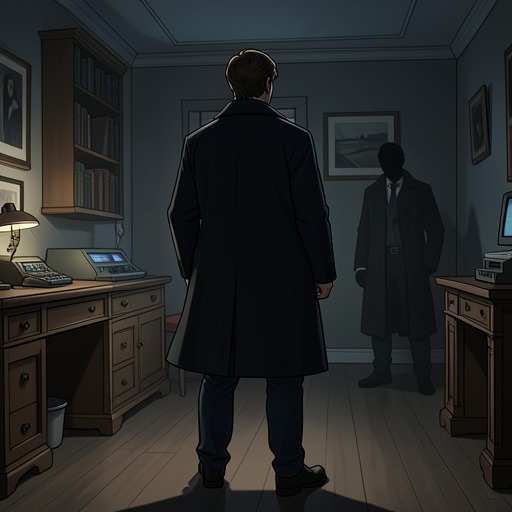
Strangers (Taichi Yamada Edition)Mamiya is a television producer and Hideo Harada’s longtime colleague and friend, whose reserve conceals a strong capacity for loyalty and care. He first unsettles Hideo by raising his estrangement from his son and announcing that he intends to see Hideo’s ex-wife, Ayako; later, when Hideo’s health and the strange circumstances around him become alarming, Mamiya acts on concern rather than withdrawing. His trajectory turns professional familiarity into a friendship tested by uncomfortable honesty, an uncanny disappearance, and the practical work of helping Hideo recover.
Identity and Professional Background
Mamiya and Hideo are both forty-seven when the story introduces their relationship, and they have worked together on and off for nearly ten years. They share credits on six projects, including a two-hour special and two drama series that Hideo considers among the most important works of his career. The collaboration is therefore more than an occasional business arrangement: it has helped shape the professional record Hideo values most.
Hideo is fond of Mamiya partly because his somewhat stiff reserve suits Hideo’s own temperament. Mamiya remains polite and correct even after years of working together, and he does not bring up his private life. That habitual discretion makes his first personal disclosures striking. When he asks to visit Hideo one evening, his formal apology for arriving at short notice initially sounds like the familiar courtesy of a colleague; the conversation soon reveals that he has come to address matters well beyond work.
Candor and Conflict
Mamiya opens their conversation by asking whether Hideo should be seeing more of his son, Shigeki. Hideo receives the question as an unexpected reprimand and cannot understand why Mamiya has taken an interest in the matter. The question exposes a part of Hideo’s life that their professional familiarity had not previously made a subject of discussion. The evidence does not give Mamiya’s reasons for raising it, but it establishes that he is willing to challenge Hideo directly about a personal relationship.
Mamiya then tells Hideo that he will no longer be able to work with him. When Hideo assumes that this means Mamiya is leaving television production, Mamiya clarifies that it does not. After Hideo presses him for an explanation, Mamiya carefully states that he intends to start seeing Ayako, Hideo’s former wife. The announcement is a sharp disruption of the decorous distance that has characterized their working relationship: Mamiya makes his intention explicit rather than letting Hideo discover it indirectly. Hideo struggles to take in what he has heard, while Mamiya’s deliberate delivery conveys how difficult it is for him to say.
The disclosure creates a potential strain between professional loyalty and personal attachment. Mamiya’s statement that he cannot continue working with Hideo accompanies his declaration about Ayako, but the account does not spell out every consideration behind that decision. What it does show is that Mamiya treats the change as something Hideo deserves to hear from him directly. Later events do not erase the awkwardness of the revelation, but they show that neither man’s regard for the other is reducible to that conflict.
Concern During Hideo’s Decline
Much later, Mamiya unexpectedly encounters Hideo at a hotel and is startled by how much he has changed. Hideo has lost weight rapidly; Mamiya tells him plainly that the change is not normal and urges him to see a doctor. Hideo tries to leave the conversation with a casual promise that he will do so, but Mamiya’s alarm continues after they part. His response makes visible a kind of attention that their earlier formal relationship had left unspoken: he notices not only that Hideo looks unwell but that the change is too pronounced to dismiss.
Mamiya later explains that he went to Hideo’s apartment after the hotel encounter. He first stopped by during an afternoon break, when Hideo was away. As worry grew, he returned around nine in the evening, saw a light in the window, and tried the intercom without receiving an answer. A man leaving the building gave him a chance to enter. When no one answered Hideo’s door, Mamiya began knocking and calling for him until a woman opened it and said that Hideo was asleep. Mamiya left, but the sight of the woman disturbed him: through the narrow opening of the door, he felt he had been able to see into the apartment as though her body were not blocking his view. He tells Hideo that he first took the experience for an illusion, yet did not trust the reassurance that Hideo was fine. The uncanny impression does not become an explanation in Mamiya’s account; it becomes another reason not to leave Hideo alone with a situation that seems unsafe.
The following day, Mamiya returns after noon and sees Hideo with the woman again. This time Hideo looks markedly healthier, even heavier, than he had at the hotel. The abrupt contrast deepens Mamiya’s alarm rather than reassuring him. He follows the pair with the building manager to apartment 305. In broad daylight, Mamiya and the manager see Hideo and the woman enter, but a young man inside denies that anyone else has come in. The office is small; their search of it, including the toilet and bath, finds no trace of either visitor. Mamiya’s account makes him a witness to the same impossible-seeming gap between what was seen and what can be found that unsettles Hideo. He does not claim to understand it. His decisive action is to try to get Hideo out of danger.
Practical Support and Farewell
After Hideo’s hospitalization, Mamiya’s concern takes an ordinary, concrete form. When Hideo leaves the hospital in mid-September, Mamiya has found him an apartment near Kyodo station on the Odakyu line. For roughly the same rent as Hideo’s previous place, the new apartment offers more room. Mamiya, Ayako, and Shigeki move Hideo’s belongings there together. The shared task brings the former colleagues and the fractured family into the same act of assistance; it is also evidence that Mamiya’s care is not confined to admonition or sympathy.
Two days later, Mamiya accompanies Hideo to Asakusa. He checks whether Hideo is sure he can manage the visit, worried that it may distress him. Hideo says that he has already found emotional closure during his hospital stay and that neither his parents nor Kei will appear again. As they leave Tawara-machi Station and walk along International Boulevard, the changing season becomes part of the farewell: summer has ended, autumn has arrived, and Hideo understands the season’s passing alongside the loss of his parents and Kei. Mamiya is present as a companion, not as someone who can undo those losses.
At the end of the visit, Mamiya joins Hideo in lighting incense and praying. Hideo thinks of bringing the chopsticks his parents used at their last meal on a future visit, finding in that intention a reason to return. In the midst of this ritual, Mamiya says he is thinking of marrying Ayako around the beginning of the next year. He anticipates that the news may taste sour to Hideo, acknowledging the former husband’s place in the conversation instead of pretending the history is irrelevant. Hideo responds that he is genuinely touched by how much concern Mamiya has shown him and tells the couple that he wishes them well.
Character and Narrative Role
Mamiya’s importance lies in the contrast between his restrained manner and his increasingly personal acts. He begins as the courteous producer who has kept his private life to himself; he becomes the friend who asks Hideo about Shigeki, discloses his intention toward Ayako, recognizes Hideo’s sudden emaciation, and returns to his apartment when the first visit leaves him uneasy. His account of the woman and the empty apartment offers an outside witness to Hideo’s unsettling experience without resolving its supernatural implications.
His later help also prevents the relationship from being defined solely by the painful news about Ayako. Mamiya assists with Hideo’s move, accompanies him on a final visit to Asakusa, and prays beside him. By then, Hideo can recognize Mamiya’s care without denying the complications of their shared history. Mamiya’s fondness extends to both men and, as he explains, eventually to Ayako as well. His planned marriage to her is thus presented not as a simple victory over Hideo, but as a new attachment acknowledged within a relationship that has survived candor, discomfort, and mutual support.